Your questions answered: Caesarean sections after fistula
February 24, 2025
In the latest instalment of our Clinical Conversations series, Dr Tigist Tesfa, junior fistula surgeon at Hamlin’s Addis Ababa Hospital, explains why Hamlin hospitals offer caesarean sections to women in their care.
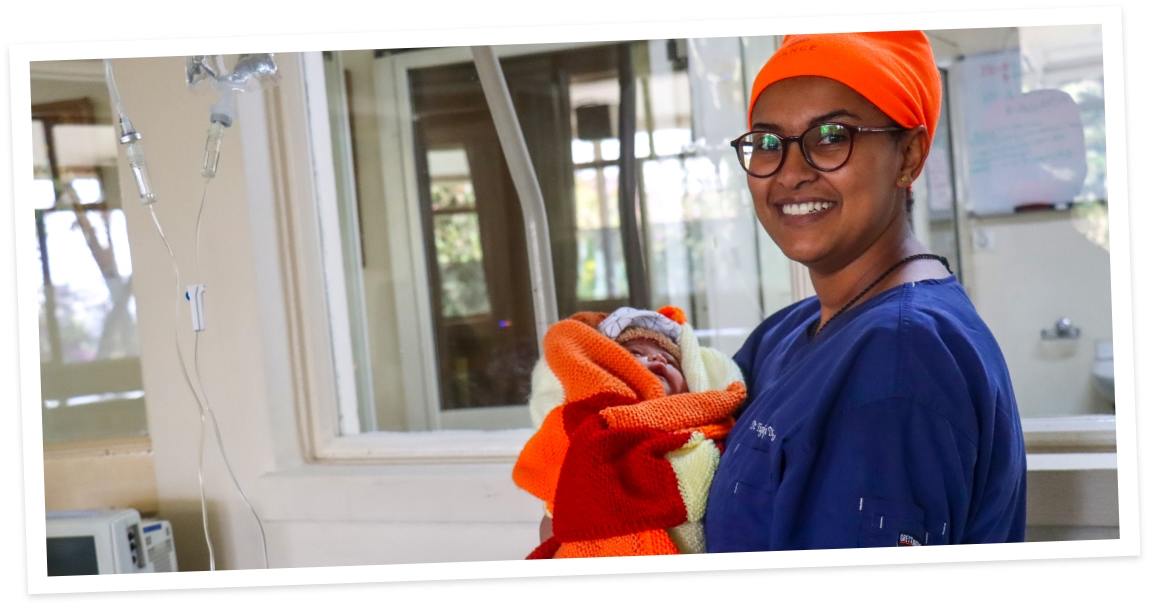
It is estimated that only one in four women will become pregnant after obstetric fistula repair. To protect the lives of women and their babies, it is recommended that they have a caesarean section for delivery.
Hamlin surgeons also undertake this procedure where there is a risk of a woman experiencing childbirth injuries or other complications if they were to have a vaginal birth.
What is a caesarean section?
This is when we deliver the baby through a surgical incision that is made on the abdomen and the uterus. It can be an elective basis or emergency basis. When it is the latter, there will be different indications, maternal or fetal.
The most common indication is a non-reassuring fetal heart rate pattern or cephalopelvic disproportion, where the head or size of the baby is bigger than the mother’s pelvis can accommodate, or the mother has a contracted pelvis.
Infections can also pose a risk when giving birth vaginally. For example, a caesarean section can provide mother-to-child transmission of HIV.
In addition, other conditions can mean a caesarean birth is safer. This includes placenta previa, where the placenta is situated in the lower uterine segment and the baby is unable to progress downward and be born vaginally.
Is a caesarean section recommended for women who have experienced obstetric fistula?
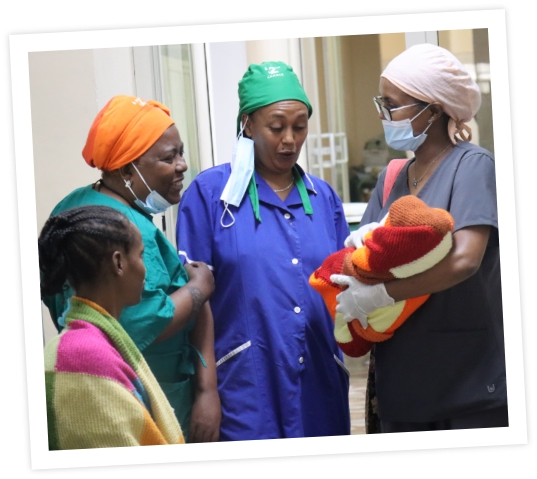
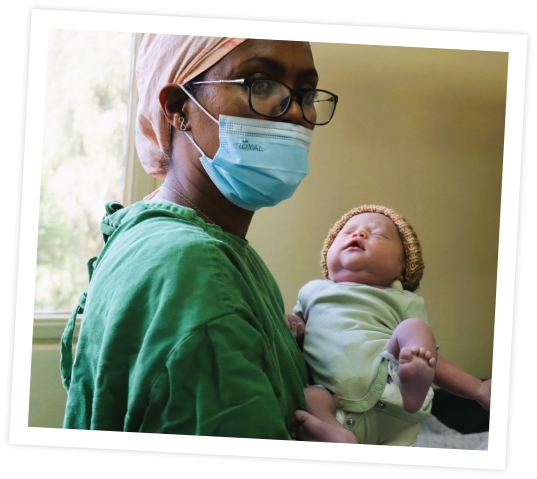
We offer a caesarean section service for mothers with previous birth injuries, which includes 3rd and 4th degree perineal tears, or who have had vesicovaginal or rectovaginal fistula repairs. Usually these patients have had an obstructed labour and it’s not recommended for them to give birth vaginally.
We provide a maternal waiting area for women from rural areas who can’t access caesarean section delivery. We give them a place to stay. We monitor the health condition of the mother and baby and then, when it is time, usually at 39 weeks of gestation, we do an elective caesarean section.
What risks are associated with a caesarean section?
A caesarean section can have associated complications which should be disclosed to the mother prior to the procedure. These include anaesthesia-related complications, bleeding, injury to the adjacent organs due to previous surgeries and adhesion. There can be injuries to the bladder or bowel. There can also be bleeding from the uterus if it has difficulty contracting.


Catherine Hamlin Fistula Foundation acknowledges the Traditional Owners and Elders past, present and emerging throughout Australia and the Gadigal people of the Eora Nation, the Traditional Owners of the land and waterways on which our Australian office is situated. We acknowledge the many ethnic groups in Ethiopia and their ancestral and cultural connection to the land where our work is undertaken.